Forgetfulness or cognitive decline: what is the difference?
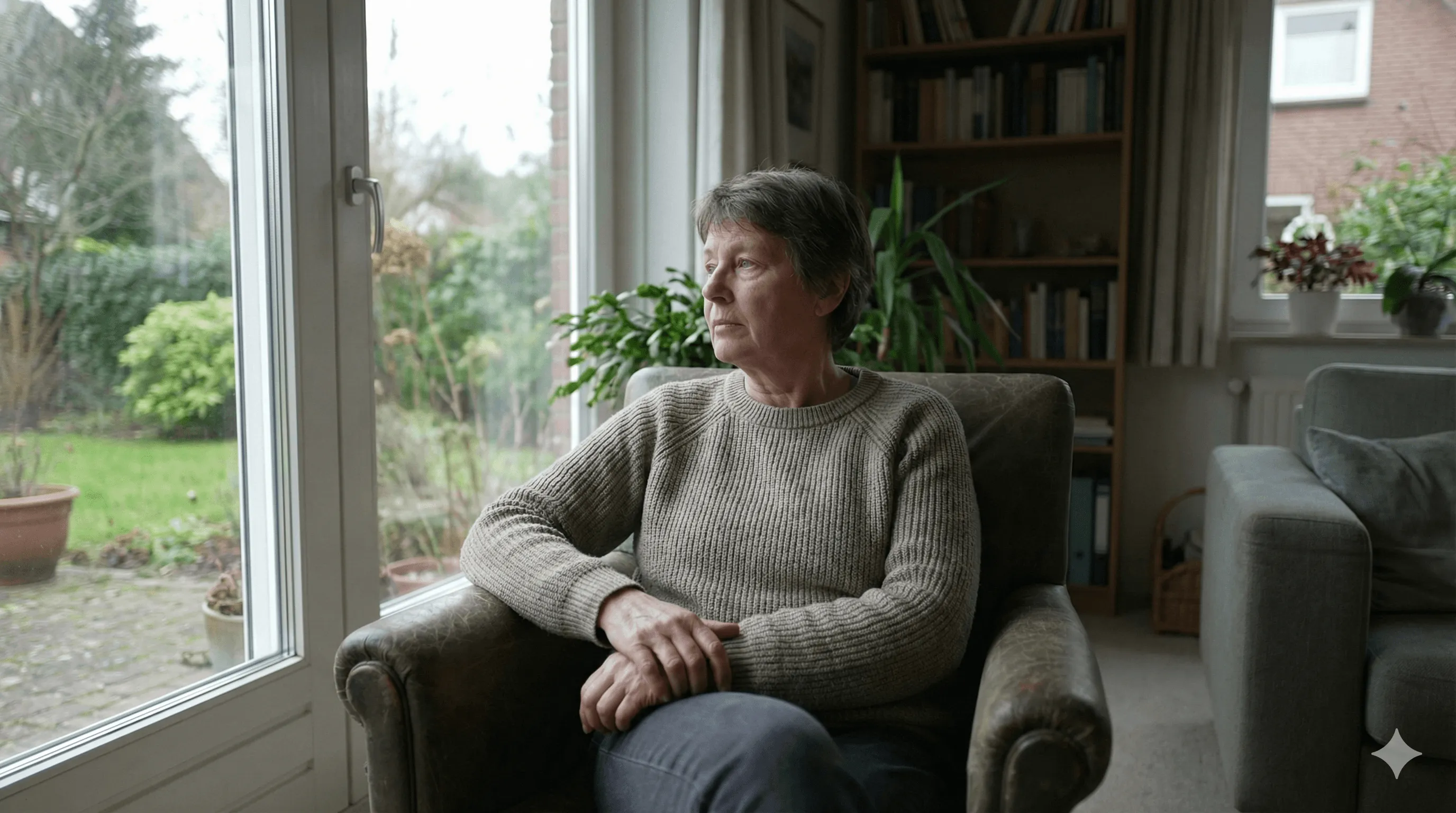
Almost everyone becomes more forgetful over the years, and that belongs to ordinary ageing. We speak of cognitive decline only when several functions work less well, when it gradually gets worse, and when it starts to affect daily life. The difference is not in a single moment, then, but in how often it happens, what it affects, and whether you and the people around you notice it.
Everyone forgets things
You go upstairs and cannot think why. A name you know perfectly well will not come. You hunt for your keys and they turn out to be in your coat pocket.
These moments are part of life, and they happen more often as you get older. Your brain takes longer to process what comes in than it did at thirty, and you need more time to store something new. That is not an illness. It is ageing, in the way your eyes become less sharp.
What stays with people is the question underneath: how do I know whether mine is ordinary ageing too? What usually causes forgetting, from stress to poor sleep, is set out in forgetful: what is normal, and what causes it?
What we call ordinary forgetfulness
Ordinary forgetfulness tends to be about small, everyday things. You forget where you put something, you search for a word, you miss an appointment that comes back to you later in the day.
Two things are typical of it. It is temporary: the information is still there, you simply cannot reach it straight away. And it does not stop you. You do your shopping, you drive, you handle your affairs the way you always did.
Is forgetfulness at 60 normal?
Usually, yes. Around sixty most people notice that names come less quickly, that they need to hear something new more often before it sticks, and that they are more easily distracted when a lot is going on at once. That is the pace of your brain slowing down, not your memory disappearing.
What usually stays the same at that age, or even grows: your vocabulary, your knowledge and your experience. If a name escapes you for a moment but you still know the story around it in detail, that is the ordinary pattern.
Less ordinary, at any age:
- you lose your way in a neighbourhood you know well
- you ask the same question several times in a short while
- familiar tasks, such as cooking or your banking, no longer go as they used to
- you forget whole events, not just details
- the people around you start to mention it
If you recognise something on this list and it persists, read on to the four questions below and talk to your GP.
What cognitive decline means
Cognitive decline is broader than memory alone. It is about brain functions working less well, and memory is one of them. It also covers:
- holding attention and concentration
- planning and organising
- solving problems you never had to think about before
- knowing where you are or what day it is
- language: finding the right word, following a conversation
Decline also means it has a direction. It is not about a bad week, but about something that changes gradually over months or years.
| Ordinary forgetfulness | Cognitive decline | |
|---|---|---|
| What it affects | Small, everyday things: a name, your keys | More than memory: planning, language, attention and knowing where you are |
| How it goes | Comes and goes, more often in busy or hard periods | Gradually gets worse over months or years |
| Finding it again | It often comes back to you later | It stays gone more often, even when someone gives you a prompt |
| Daily life | You manage your affairs as you always did | What came naturally takes effort or gets avoided |
| Who notices | Mostly you | Often the people around you first |
What is MCI?
MCI stands for mild cognitive impairment. It sits between ordinary forgetfulness and dementia. Memory or thinking works clearly less well than you would expect at your age, and that shows in tests. But you still largely manage your daily life on your own.
Three things are worth knowing:
- MCI is not dementia. In dementia the problems affect daily life to the point where you need help. In MCI that is not yet the case.
- It does not always have the same cause. Sometimes MCI is an early sign of a disease that later leads to dementia. Sometimes something else lies behind it, such as low mood, poor sleep, medication or a deficiency that can be put right.
- It does not run the same course for everyone. Some people with MCI go on to develop dementia, but far from everyone. For some it stays stable, and for some it gets better again.
MCI is not something you establish yourself. A doctor does, with conversations and tests, often at a memory clinic after a referral from your GP. What you can do yourself is keep track of changes, so you have something concrete to tell your GP.
Where the difference lies
No single incident settles it. What does give you something to hold on to are four questions.
-
Does it happen more often than it used to?
Not more often than for someone else, but more often than for you a year or two ago. You are your own reference point.
-
What does it affect?
Losing a name is not the same as losing your way in a neighbourhood you know. The more automatic something used to be, the more it says when it now takes effort.
-
Do other people notice it too?
This may be the most useful signal of all. People who see you daily often spot changes before you do, because you do not notice the adjustments you make.
-
Is it getting in your way?
As long as you are doing what you always did, something different is going on than when you start avoiding things or leaving them undone.


Why one moment says little
Everyone has off days. Poor sleep, stress, a cold, medication, too much to drink the night before: all of it affects how well your head works. Test yourself on a day like that and the result will alarm you, while nothing has changed.
That is why a single measurement is not an answer. What does say something is a series: the same measurement, repeated over months, in which you can see what is usual for you and whether there is a direction in it. An outlier then stands out as an outlier, rather than as a verdict.
What you can do yourself
This is the part that tends to get lost. A considerable share of dementia cases is connected to factors you can influence. Researchers at Maastricht University brought these together in the LIBRA score: fifteen factors, among them blood pressure, exercise, smoking, sleep, hearing, mood and seeing people.
That is not a guarantee, and nobody can promise that living well will keep everything at bay. It is the opposite of waiting helplessly, though, and it works at any age. Read about the fifteen lifestyle factors, or about what research says about lifestyle and your risk of dementia.
Sources
- Alzheimer's Society: memory problems and dementia (opens in a new window)
- Livingston et al., Dementia prevention, intervention, and care (Lancet, 2024) (opens in a new window)
- Alzheimer's Society: mild cognitive impairment (MCI) (opens in a new window)
- Alzheimer's Society: what causes MCI and how it progresses (opens in a new window)
- Deckers et al., LIBRA: an index of modifiable risk factors (opens in a new window)